
Operationalizing Research

Research usually lives in decks and docs. Decisions don’t. I built an internal system to help research show up where decisions actually happen—without writing yet another slide deck.

Product & Strategy

Research

Internal Tool

At a Glance

Decision: How to make research insights accessible and usable across product, sales, and GTM teams at the moment decisions are made

Context: Strong research output, but limited reuse of insights in fast-moving deal and roadmap decisions

My role: Senior UX Researcher responsible for internal research, insight structure, and system design

Outcome: Built an internal, AI-assisted research system that connected insights across sources and supported faster, more informed decisions

Decision: How to make research insights accessible and usable across product, sales, and GTM teams at the moment decisions are made

Context: Strong research output, but limited reuse of insights in fast-moving deal and roadmap decisions

My role: Senior UX Researcher responsible for internal research, insight structure, and system design

Outcome: Built an internal, AI-assisted research system that connected insights across sources and supported faster, more informed decisions

Decision: How to make research insights accessible and usable across product, sales, and GTM teams at the moment decisions are made

Context: Strong research output, but limited reuse of insights in fast-moving deal and roadmap decisions

My role: Senior UX Researcher responsible for internal research, insight structure, and system design

Outcome: Built an internal, AI-assisted research system that connected insights across sources and supported faster, more informed decisions

Decision: How to make research insights accessible and usable across product, sales, and GTM teams at the moment decisions are made

Context: Strong research output, but limited reuse of insights in fast-moving deal and roadmap decisions

My role: Senior UX Researcher responsible for internal research, insight structure, and system design

Outcome: Built an internal, AI-assisted research system that connected insights across sources and supported faster, more informed decisions

Overview

As the organization grew, research insights were increasingly valuable — but also increasingly hard to use.

Insights lived across decks, documents, and conversations. Teams trusted the research, but accessing it often required time, context, or direct researcher involvement.

This work focused on a simple question:

How can research show up consistently in everyday decisions, not just in presentations?

Designing for Internal Decision Efficiency

Early interviews with internal teams revealed a consistent pattern:

most questions being asked had already been answered somewhere in existing research.

Examples included:

  • “What have we learned about how buyers evaluate X?”

  • “Do we have evidence to support this positioning?”

  • “What risks have we seen in similar deals or launches?”

The issue wasn’t lack of insight.

It was the time and effort required to locate, validate, and reuse it.

This created unnecessary friction in moments where decisions needed to be made quickly.

Early interviews with internal teams revealed a consistent pattern:

most questions being asked had already been answered somewhere in existing research.

Examples included:

  • “What have we learned about how buyers evaluate X?”

  • “Do we have evidence to support this positioning?”

  • “What risks have we seen in similar deals or launches?”

The issue wasn’t lack of insight.

It was the time and effort required to locate, validate, and reuse it.

This created unnecessary friction in moments where decisions needed to be made quickly.

Early interviews with internal teams revealed a consistent pattern:

most questions being asked had already been answered somewhere in existing research.

Examples included:

  • “What have we learned about how buyers evaluate X?”

  • “Do we have evidence to support this positioning?”

  • “What risks have we seen in similar deals or launches?”

The issue wasn’t lack of insight.

It was the time and effort required to locate, validate, and reuse it.

This created unnecessary friction in moments where decisions needed to be made quickly.

Early interviews with internal teams revealed a consistent pattern:

most questions being asked had already been answered somewhere in existing research.

Examples included:

  • “What have we learned about how buyers evaluate X?”

  • “Do we have evidence to support this positioning?”

  • “What risks have we seen in similar deals or launches?”

The issue wasn’t lack of insight.

It was the time and effort required to locate, validate, and reuse it.

This created unnecessary friction in moments where decisions needed to be made quickly.

Structuring Research for Reuse

Before introducing any AI layer, I focused on restructuring how research was stored and maintained.

This included:

  • defining a clear hierarchy of insights (foundational vs situational)

  • linking synthesized findings back to source material

  • establishing ownership and update expectations to maintain trust

  • standardizing how competitive and customer insights were documented

This groundwork ensured that any system built on top of the repository would surface reliable, verifiable information.
AI as an Access Layer, Not an Analysis Engine

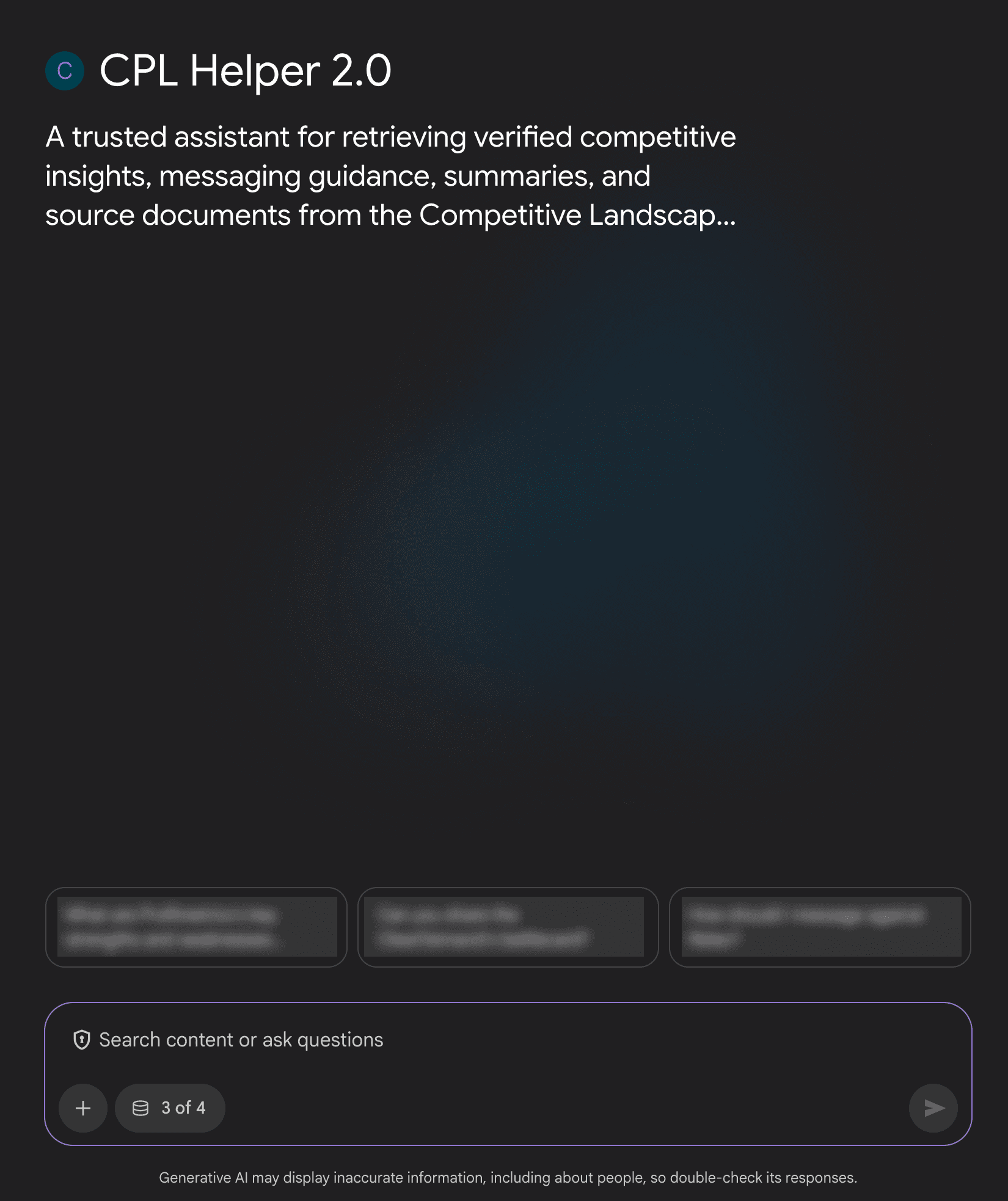
With structure in place, I introduced an AI-assisted access layer to reduce friction in finding and applying research.

The system was designed to:

  • answer common questions using existing insights

  • summarize patterns across studies when appropriate

  • direct users to source material for deeper context

It was intentionally constrained.

The system did not replace researcher synthesis or generate new conclusions.

Its value came from speed, consistency, and accessibility.

Impact

Operational Impact

  • Reduced repeated ad-hoc research requests from Sales and Product teams

  • Enabled faster access to relevant insights during deal preparation and roadmap discussions

  • Improved consistency in how research was referenced across teams

Business Impact

Over the following year, Sales and Product Marketing cited this system as a key contributor to improved decision efficiency and alignment, alongside measurable outcomes:

  • 96% YoY increase in conversion rate

  • 27% improvement in win/loss outcomes

  • ~$2.7M in incremental revenue attributed to better deal positioning and roadmap alignment

Why This Case Matters

This case demonstrates how research can scale beyond individual studies.

By designing systems that make insights accessible, connected, and trustworthy, researchers can support better decisions across the organization — without sacrificing rigor.

Research

Decision Systems

Internal Enablement

Research Infrastructure

AI-Assisted Workflows

January 12th, 2026